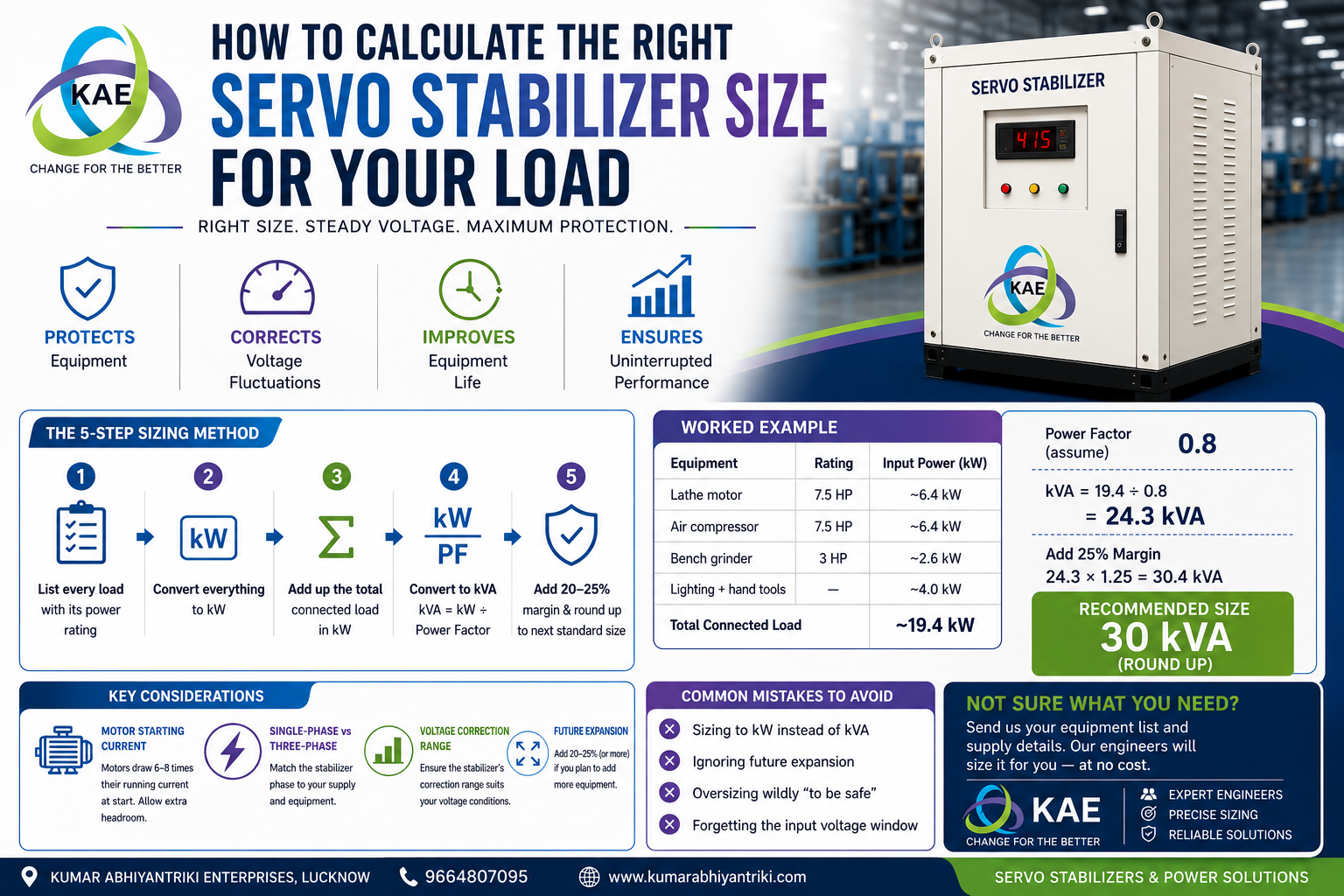
The Complete Guide to Servo Controlled Voltage Stabilizers: Working Principle, Benefits & Industrial Applications
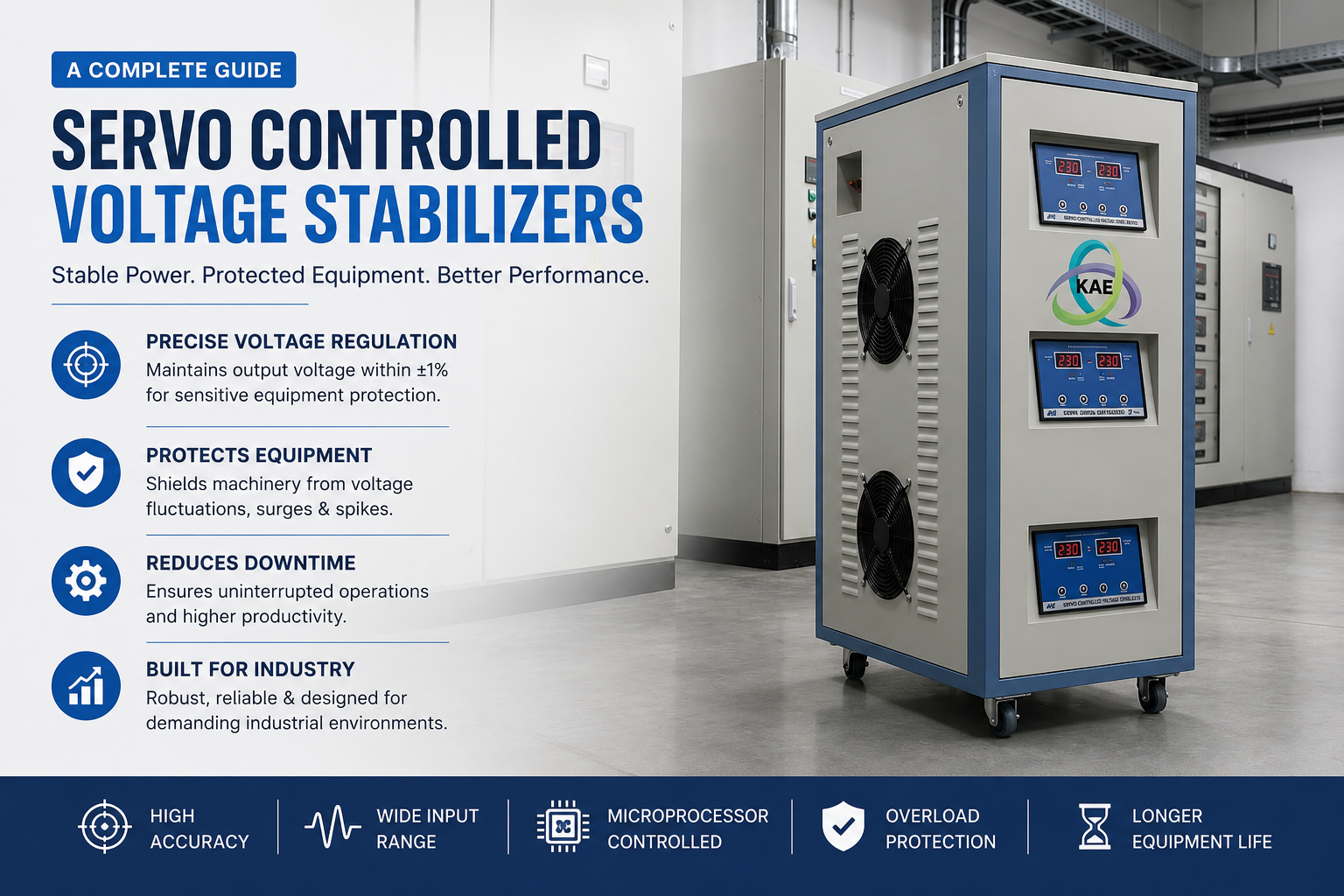
In today's industrial world, uninterrupted and stable power is essential for maintaining productivity and protecting expensive electrical equipment. Voltage fluctuations, surges, and drops can significantly reduce the lifespan of machinery, cause unexpected downtime, and increase maintenance costs.
A Servo Controlled Voltage Stabilizer (SCVS) is designed to eliminate these problems by delivering a constant output voltage even when the incoming supply fluctuates. Whether you operate a manufacturing plant, hospital, data center, pharmaceutical facility, or commercial building, installing a servo stabilizer is one of the smartest investments you can make for long-term operational reliability.
What is a Servo Controlled Voltage Stabilizer?
A Servo Controlled Voltage Stabilizer is an automatic voltage regulation system that continuously monitors the incoming supply voltage and adjusts it to deliver a stable output voltage. Unlike conventional stabilizers that operate in fixed steps, servo stabilizers provide smooth and highly accurate voltage correction.
These systems are widely used in industries where even minor voltage fluctuations can affect productivity or damage sensitive electrical equipment.
Why Voltage Fluctuations Are Harmful
Power quality issues are common in industrial and commercial environments. They may be caused by overloaded transformers, unstable utility supply, heavy machinery startup, seasonal demand, or long transmission lines.
Voltage fluctuations can result in:
- Equipment failure
- Motor overheating
- Reduced production efficiency
- Unexpected downtime
- Damage to PLCs and control systems
- Frequent maintenance expenses
- Higher operating costs
Maintaining a constant voltage helps businesses minimize these risks while improving equipment performance.
How Does a Servo Controlled Voltage Stabilizer Work?
A servo stabilizer continuously measures the incoming voltage using an electronic sensing circuit. When the voltage falls outside the desired range, the controller activates a precision servo motor.
The servo motor adjusts a variable autotransformer (Variac), which works together with a buck-boost transformer to either increase or decrease the voltage until the output returns to its preset value.
This closed-loop feedback system ensures smooth, continuous, and highly accurate voltage correction without sudden switching.
Main Components of a Servo Stabilizer
- Servo Motor
- Variable Auto Transformer (Variac)
- Buck-Boost Transformer
- Electronic Control Circuit
- Digital Display Meter
- Protection Devices (MCB/MCCB)
- Cooling System
Each component plays an important role in maintaining reliable voltage regulation.
Benefits of Servo Controlled Voltage Stabilizers
1. Accurate Voltage Regulation
Servo stabilizers maintain output voltage within a very narrow tolerance, providing reliable protection for sensitive electrical equipment.
2. Increased Equipment Life
Stable voltage reduces stress on motors, compressors, CNC machines, laboratory equipment, PLC systems, and automation devices, extending their operational lifespan.
3. Reduced Downtime
Unexpected production interruptions caused by voltage instability are significantly reduced, improving productivity and operational efficiency.
4. Lower Maintenance Costs
By protecting electrical equipment from voltage-related damage, businesses spend less on repairs and replacements.
5. Improved Operational Reliability
Industries relying on continuous operations benefit from consistent power quality, resulting in smoother production and fewer failures.
6. Better Performance of Electrical Equipment
Machines perform closer to their rated specifications when supplied with stable voltage, improving overall efficiency.
Industrial Applications
Servo controlled voltage stabilizers are widely used across various industries.
- Manufacturing Plants
- Hospitals and Healthcare Facilities
- Data Centers
- Pharmaceutical Industries
- Food Processing Units
- Printing Industries
- Textile Manufacturing
- Educational Institutions
- Commercial Buildings
- Automation Systems
Servo Stabilizer vs Conventional Stabilizer
| Feature | Servo Stabilizer | Conventional Stabilizer |
|---|---|---|
| Voltage Regulation | Continuous | Step Based |
| Accuracy | High | Moderate |
| Industrial Applications | Excellent | Limited |
| Response | Smooth | Switching Type |
| Equipment Protection | Superior | Basic |
How to Choose the Right Servo Stabilizer
Before purchasing a servo stabilizer, consider the following factors:
- Total connected load
- Input voltage range
- Output voltage accuracy
- Single-phase or three-phase requirements
- Air-cooled or oil-cooled design
- Available protection features
- Future load expansion
Proper sizing ensures reliable performance and long service life.
Maintenance Tips
Routine maintenance improves reliability and minimizes unexpected failures.
- Inspect electrical connections regularly.
- Clean accumulated dust.
- Check cooling fans.
- Inspect transformer oil in oil-cooled models.
- Verify grounding connections.
- Calibrate voltage settings periodically.
- Schedule preventive maintenance annually.
Common Installation Mistakes
- Selecting an undersized stabilizer.
- Poor earthing.
- Ignoring future capacity requirements.
- Skipping preventive maintenance.
- Installing without professional assessment.
A properly installed servo stabilizer delivers years of reliable performance while protecting valuable equipment.
Future of Servo Controlled Voltage Stabilizers
Modern stabilizers are becoming increasingly intelligent with features such as IoT monitoring, cloud connectivity, predictive maintenance, remote diagnostics, energy analytics, and integration with industrial automation systems.
These technologies help businesses monitor power quality in real time while reducing maintenance costs and preventing unexpected downtime.
Frequently Asked Questions
What is a servo controlled voltage stabilizer?
It is an automatic voltage regulation system that continuously maintains a stable output voltage despite fluctuations in the incoming electrical supply.
Can a servo stabilizer provide power backup?
No. A servo stabilizer regulates voltage but does not provide backup power during outages. A UPS is required for battery backup.
How long does a servo stabilizer last?
With proper installation and routine maintenance, a quality servo stabilizer can operate reliably for 15 to 20 years or more.
Where are servo stabilizers commonly used?
They are widely used in manufacturing industries, hospitals, laboratories, data centers, pharmaceutical plants, commercial buildings, and other facilities where stable voltage is essential.
Conclusion
Servo Controlled Voltage Stabilizers are an essential part of modern electrical infrastructure. They protect valuable equipment from voltage fluctuations, improve operational efficiency, reduce maintenance costs, and increase the lifespan of industrial machinery.
Whether your business operates a production facility, healthcare center, commercial complex, or critical IT infrastructure, investing in a high-quality servo stabilizer ensures reliable power quality and uninterrupted operations for years to come.
Explore our products
Browse KAE’s full range of industrial power and automation equipment.
View all products